DJI’s Goggles 3 and Goggles N3 are both FPV / first-person view goggles using the O4 video transmission system, aimed at drone pilots who want immersive flight experience. The Goggles 3 is the higher-end model with premium micro-OLED displays, better build, more adjustment, more features; the N3 is positioned as a more budget / accessible version with a wider field of view and simpler design.
Let’s make long story short: If you want top image quality, best comfort, clarity, and premium adjustability, go for DJI Goggles 3. If you’re more price-sensitive or want wider FOV and are okay with somewhat lower refresh rate, then Goggles N3 still gives you good value.
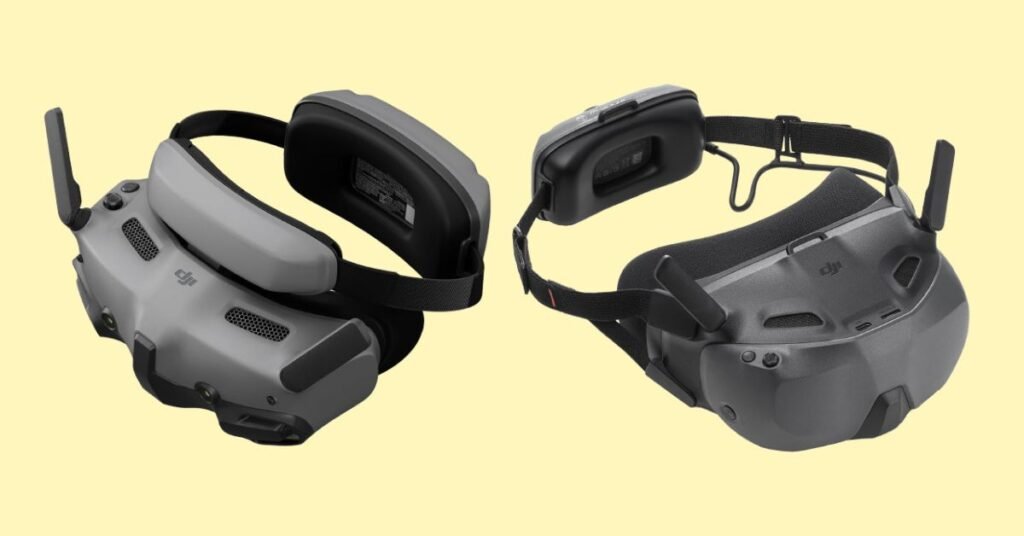
Why Do I Recommend the DJI Goggles 3?
- Higher refresh rate & smoother visuals — Goggles 3 supports up to 100 Hz refresh rate, which makes motion smoother especially in fast maneuvers.
- Better display technology — Micro-OLED display gives better contrast, deeper blacks, and generally higher fidelity compared to the LCD screen in N3.
- More adjustment & eye comfort — Goggles 3 has interpupillary distance (IPD) adjustment (56-72 mm) and diopter adjustment for vision correction (-6.0 D to +2.0 D). N3 lacks diopter adjustment and has no IPD adjustment.
- Better battery life — Slightly longer operating time (~3 hours) for Goggles 3 vs ~2.7 hours for N3.
- Build & comfort — Goggles 3 is lighter (≈ 470 g with battery) and more compact design vs the heavier N3 (≈ 536 g with battery).
Detailed Comparison & Recommendation
| Feature / Spec | DJI Goggles 3 | DJI Goggles N3 | Which Is Best & Why? |
|---|---|---|---|
| Display / Refresh Rate | 1920×1080 micro-OLED per eye, up to 100 Hz refresh. | 1920×1080 LCD, up to 60 Hz refresh. | Goggles 3 wins for smoother motion and better visual fidelity; N3 is more basic but adequate. |
| Field of View (FOV) | ~44° per eye. | Wider ~54° FOV. | N3 wins in immersive feel via wider view; 3 has tighter FOV but higher clarity. |
| Adjustment / Eye Comfort | Interpupillary Distance 56-72 mm; diopter adjustment (-6.0D to +2.0D). | No IPD adjustment; no built-in diopter adjustment. | Goggles 3 better for users needing vision correction or more precise fit. |
| Weight & Portability | Approx. 470 g with battery; antennas foldable. | Heavier approx. 536 g with battery & headband; larger form. | Goggles 3 is more comfortable over long flight durations. |
| Battery & Operating Time | ~3 hours max operating time. | ~2.7 hours. | Slight edge to Goggles 3. |
| Transmission & Compatibility | O4 Video Transmission; works with many DJI drones. Low latency. | Also uses O4, 1080p/60fps live feed, good range. | Close tie, but Goggles 3 has advantage with higher refresh and premium display. |
| Check Best Seller | Check DJI Goggles 3 Best Price | Check DJI Goggles N3 Best Price | N3 is good option for budget or casual use; 3 is premium investment for serious users. |
What Are The Major Differences
- Goggles 3 supports 100 Hz refresh rate vs N3’s 60 Hz.
- Goggles 3 uses micro-OLED displays, offering better contrast and image quality; N3 uses LCD.
- Goggles 3 has IPD adjustment and diopter support; N3 lacks these.
- Field of View is wider on N3 (~54°) vs Goggles 3 (~44° per eye), giving more immersive peripheral view but less clarity.
- Goggles 3 is lighter (~470 g vs ~536 g) and more compact, more comfortable for extended flights.
- Battery life is slightly better for Goggles 3.
- Price / value trade-off: Goggles 3 costs more but offers premium experience; N3 gives wider view and good basic features at lower cost.
Check Goggles 3 Limited Time Deal Here
What Users Are Saying
| Feature / Feedback | Goggles 3 Users | Goggles N3 Users |
|---|---|---|
| Smoothness & Motion | “Motion is fluid; 100 Hz makes fast turns and movements look much more stable.” | “60 Hz is okay; some motion blur visible in fast maneuvers.” |
| Visual Quality & Clarity | “Contrast and blacks are amazing; the OLED really stands out; content looks rich.” | “Image is good for the price; colors aren’t as vibrant; LCD is more washed in bright scenes.” |
| Fit / Eye Comfort | “IPD + diopter adjustments make a big difference; fewer problems with eye fatigue.” | “Wider FOV is immersive, but the weight and lack of adjustment can cause discomfort.” |
| Battery / Flight Duration | “Close to 3 hours in light usage; heavier usage drains faster.” | “About ~2.5-3 hours; enough for shorter flights or casual use.” |
| Recommended Best Seller | Check DJI Goggles 3 Best Price | Check DJI Goggles N3 Best Price |
Fair Advice to Consider
- If you’re doing serious FPV flying, long sessions, care about clarity, being able to read details (e.g. HUD, fine visuals), the Goggles 3 is clearly the better investment.
- If your flights are shorter, you fly more casually, or you want wider immersion rather than maximum clarity, the N3 may give satisfying value.
- Consider vision correction: if you wear glasses or need adjustable IPD, the Goggles 3 will reduce eye strain.
- Consider your budget: the cost difference is significant; if your budget is tight, N3 might be a very decent way in.
- Also consider the drone you fly: if your drone has very high resolution output or demands high fidelity view, G3’s display & refresh will better match. If not, you may not notice all the difference.
Quick Comparison Table – DJI Goggles 3 vs N3
| Feature / Spec | DJI Goggles 3 | DJI Goggles N3 |
|---|---|---|
| Display | 1920×1080 Micro-OLED per eye, up to 100 Hz | 1920×1080 LCD per eye, up to 60 Hz |
| Field of View (FOV) | ~44° per eye | ~54° per eye (wider, more immersive) |
| Eye Adjustments | IPD (56-72 mm) + Diopter (-6.0D to +2.0D) | No IPD or diopter adjustment |
| Weight | ≈470 g with battery | ≈536 g with battery |
| Battery Life | ~3 hours | ~2.7 hours |
| Transmission | O4 video, low latency, 1080p feed | O4 video, low latency, 1080p feed |
| Comfort | Lighter, compact, better for long sessions | Heavier, bulkier, can cause fatigue |
| Price & Value | Check DJI Goggles 3 Best Price | Check DJI Goggles N3 Best Price |
FAQs
Do both Goggles 3 and N3 use the DJI O4 transmission system?
Yes. Both models rely on DJI’s O4 digital transmission, giving strong signal stability and low latency.
Which one has the better display quality?
The Goggles 3 uses micro-OLED panels, which deliver richer colors, deeper blacks, and smoother visuals (100 Hz). The N3 uses LCD at 60 Hz, which is decent but less sharp and vibrant.
Is the wider field of view (FOV) on the N3 better?
The N3 offers ~54° FOV, which feels more immersive, but clarity at the edges isn’t as strong. The Goggles 3 has ~44° FOV, slightly narrower but more detailed and stable.
Can people with glasses use these goggles?
Yes, but Goggles 3 has diopter adjustment (-6.0D to +2.0D) and IPD adjustment, making it much easier for users with vision needs. The N3 lacks these adjustments.
How is the comfort for long flights?
The Goggles 3 is lighter (≈470 g) and has better padding, so it’s more comfortable for extended flying sessions. The N3 is heavier (≈536 g) and may cause fatigue after longer use.
Which one lasts longer on a charge?
The Goggles 3 lasts around 3 hours, while the N3 typically lasts about 2.7 hours.
Final Verdict
For users seeking the best FPV viewing experience, DJI Goggles 3 is the superior choice. It offers smoother motion, much better display quality, more adjustments for comfort, and slightly better battery life. Goggles N3 is a solid alternative for those wanting immersive field of view at a lower cost or for casual flying. But given what you pay for and what you get, Goggles 3 is worth it if you care about fidelity, comfort, and premium features.
Jump To